Leadership on Lead
What my dog taught me about trusting the people closest to the work
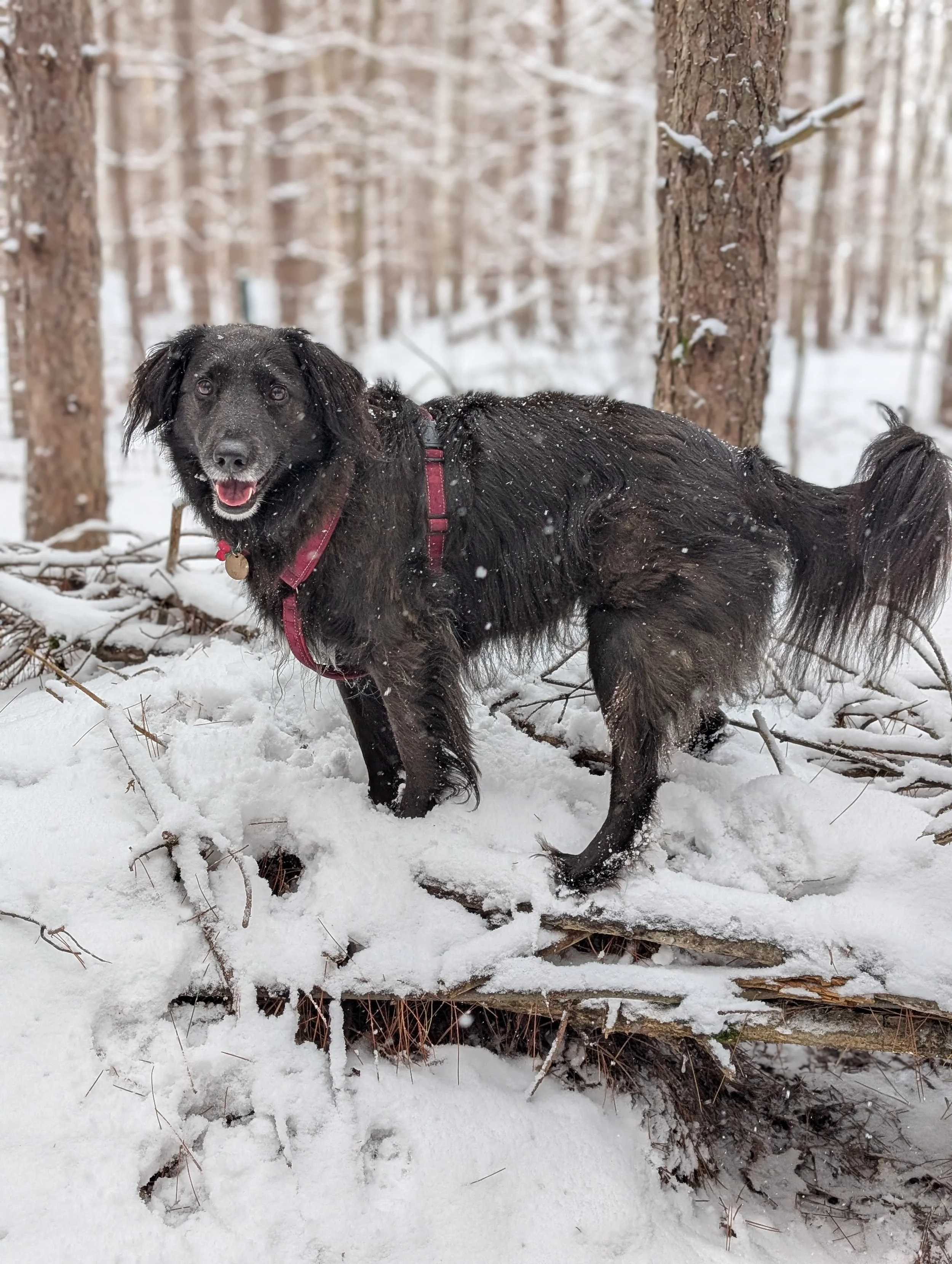
It was one of those perfect Wisconsin winter mornings.
Fresh snow blanketed the ground, softening every sound as Thea and I made our way down a trail at Necedah National Wildlife Refuge.
Thea trotted ahead, nose drifting through the cold air.
Then she stopped.
Not hesitated.
Stopped.
Her body stiffened. Her ears perked up. Every ounce of her attention focused somewhere deeper in the woods.
I looked down the trail. Behind us.
Nothing.
I, too, stood perfectly still and listened.
Dead silence.
I encouraged her to shake it off and keep going. Offered her a treat.
She wouldn't move. She wouldn’t eat.
Now the whites of her eyes flashed. Her tail dropped. Her ears pinned back. I read her loud and clear. We called it a day and headed back to the Jeep.
Cozied up in the warmth of our camper, I thought about why I followed her lead without any proof there was danger.
It wasn't blind trust.
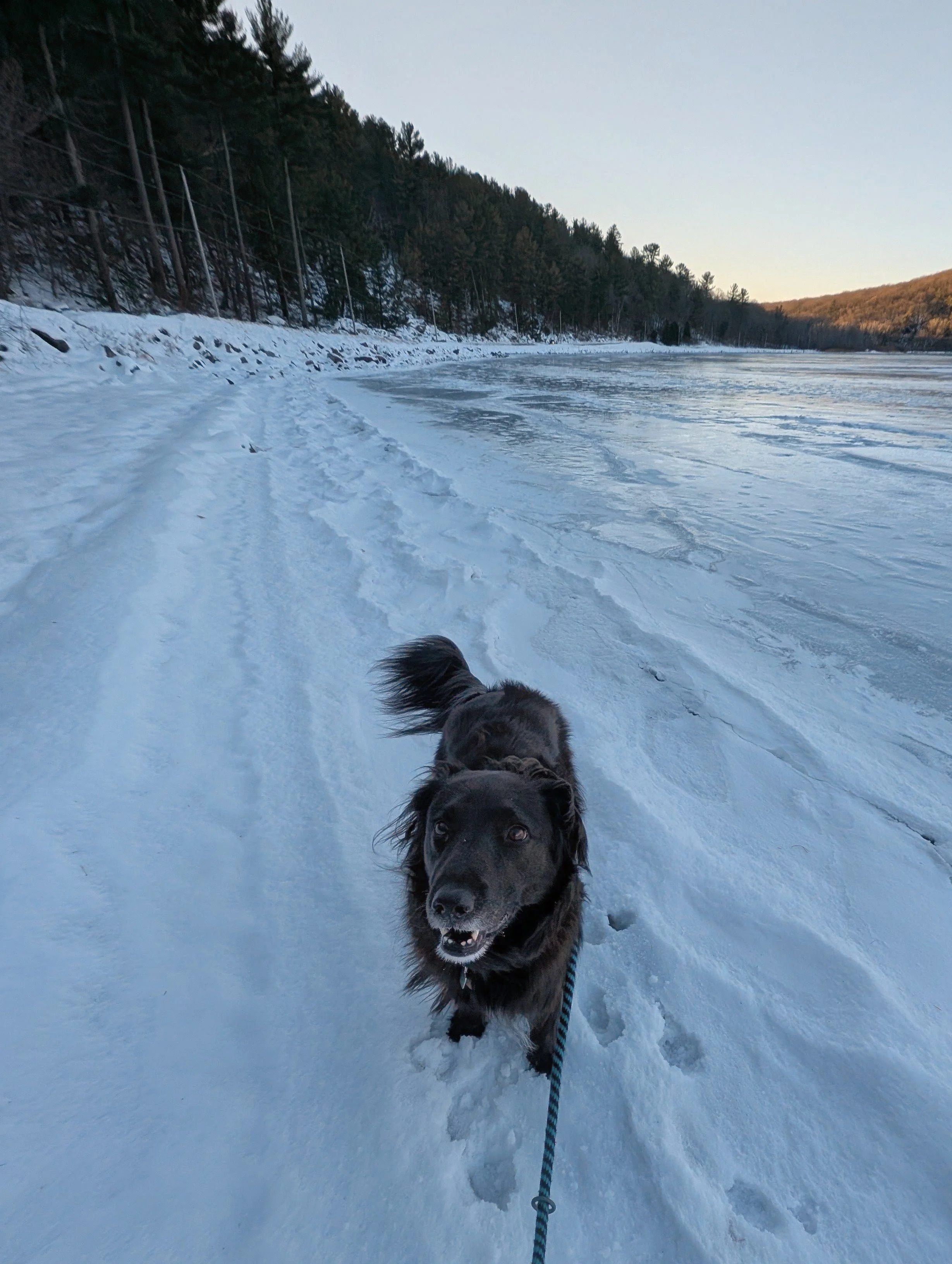
It was trust built over hundreds of ordinary moments when she'd shown me that her behavior meant something.
Somewhere along the way, Thea taught me that leadership isn't about having all the information. It's about recognizing when someone else does.
Her refusal to move wasn't disobedience.
It was information. Behavior often tells a story long before performance reports do.
The same goes for our teams at work.
A frontline employee raising the same concern for the third time.
A volunteer who suddenly disengages.
A supervisor who seems unusually frustrated.
How often do we dismiss these moments as personality, mood, or "just the way things are" instead of asking what they're trying to tell us?
Behavior is rarely random. It's communication waiting for someone to notice.
The farther leaders move from frontline work, the easier it becomes to mistake distance for perspective. Perspective matters, of course, but proximity matters, too.
Like Thea on that snowy trail, the people closest to the work experience it in real time. They notice subtle shifts long before the rest of us do because they're the ones living them.
Thea couldn't prove we should turn around. I couldn't prove we shouldn't.
I could have ignored her behavior and forced her to push on.
But I turned around because of the years I’d spent learning about my trailmate. I trusted her instincts. She trusted I'd pay attention to them.
The experience left me with a question I haven't been able to shake.
It's easy to say we should trust the people closest to the work. So why don't we?
I wonder if it’s because the people closest to the work rarely bring certainty.
They hand us observations.
Patterns.
Questions.
The same things Thea handed me on that snowy trail.
And when certainty hasn't arrived yet...
It's tempting to keep walking.
That's a hard and uncomfortable part of leadership.
Waiting for certainty looks responsible.
Until you realize what waiting costs.
Someone notices a problem but doesn't want to be negative. Someone raises a concern and hears nothing back.
A supervisor senses something is off but chooses not to speak up because they don't want to rock the boat.
Over time, the information stops flowing.
People don’t stop speaking up because they stop caring. They stop speaking because experience teaches them it changes nothing.
That morning at Necedah, I happened to be holding the leash. But holding the leash wasn't what made me the leader.
Leadership was noticing the change in tension.
Seeing the shift in her body.
And long before that, building a relationship where trust could travel in both directions.
Our organizations need those same kinds of connections. Relationships where people trust that when they notice something important, it is safe to say so, and someone on the other end of the line will listen.
A week after the turnaround hike, we were driving near the refuge again when a wolf stepped from the woods. For a brief few seconds, it trotted alongside the road before disappearing back into the forest.
I looked in the rearview mirror at Thea, stretched out long, soundly sleeping in the back seat. Maybe that's what she sensed.
Maybe it wasn't.
But by that point, I’d stopped needing to know.
The lesson wasn't about whether she was right.
It was about what happened before either of us had all the answers.
And that kind of trust isn't built in extraordinary moments.
It's built through hundreds of ordinary ones.
