3 Easy Steps to a Better Fall Hike
I had the chance to join Lee Rayburn on WPR today to talk about hiking with dogs, and one of the things I kept coming back to was this: your dog doesn't have to earn the adventure. Your job is to choose an adventure they can participate in. Check out the show!
Fall weather is rolling in, which means the best hikes of the year, in my humble opinion, are nearly upon us.
Before you head out and tackle the same leash or trail struggles you've been battling all summer, here's the good news: you can improve your odds of having a great hike without teaching your dog a single new skill.
Here are three places to start.
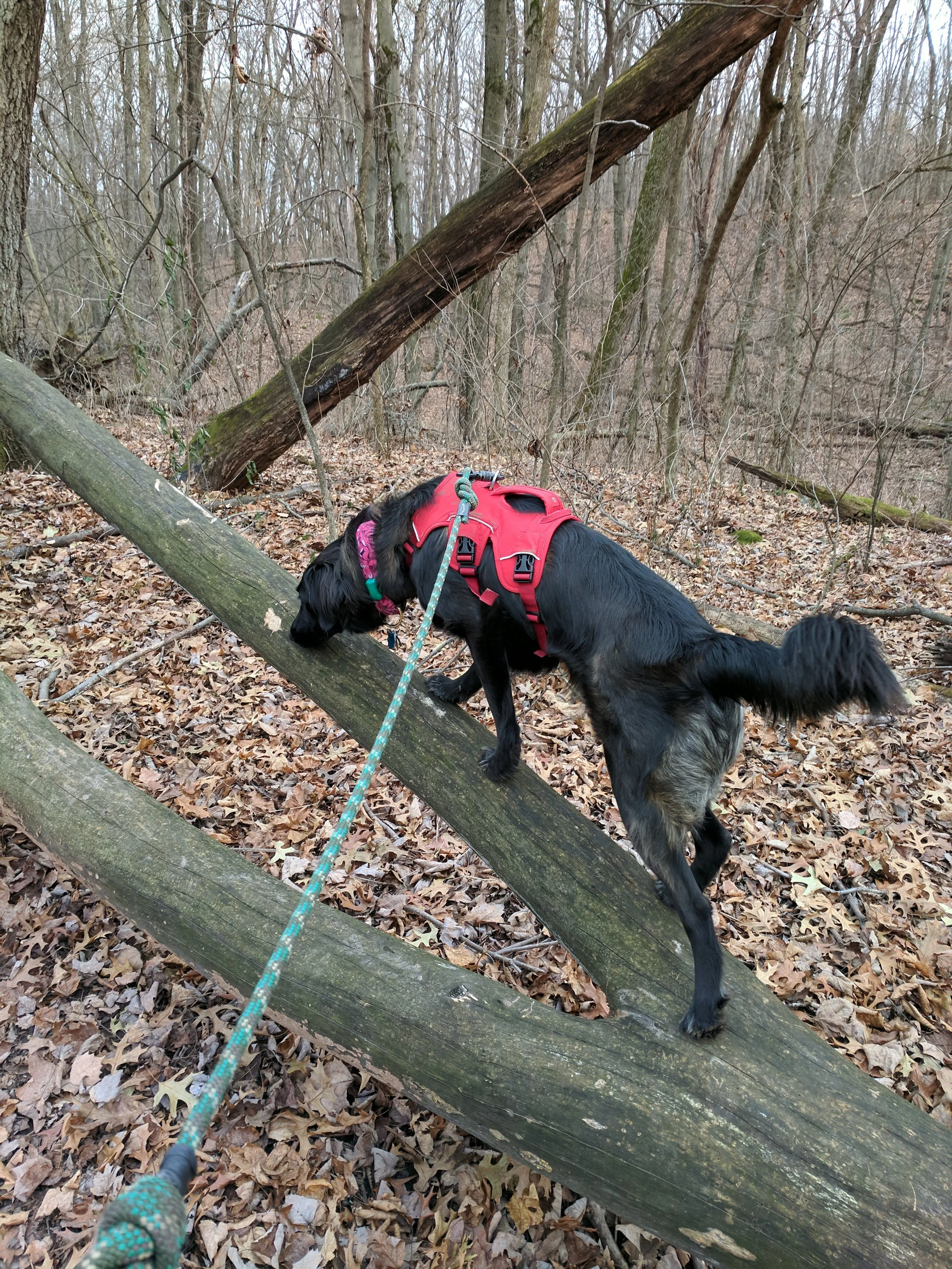
Choose the best adventure
Our area offers incredible options for hikes - from urban treks to the rolling Driftless Area. But the reality is that not all hikes are for all dogs. If your dog struggles with passes on tight trails, unexpected bikes rolling up on them, or treetop antics of squirrels, the goal is to reduce the odds of these encounters.
Think of it this way. If you invited me to hit up Devil’s Lake on a Saturday in July at 10 am, it’s a firm hell no. It’s too hot, too crowded, and hiking in a line with dozens of randos is not on any to-do list of mine. Now, ask me about a Tuesday morning in November and I’ve already made a note to call in sick on my calendar.
Your dog is no different and part of being a killer dog handler is to know the dog in front of you. Know their preferences. Know their limitations. And don’t get sucked into “giving it another shot” in hopes of your dog NOT overreacting this time.
Choosing an environment where your dog can succeed isn't avoiding the problem. It's good handling.
Create predictable patterns
Patterns build confidence. I know how to do this. Patterns are transferable. I can do this in a new place.
When you arrive for a walk or hike, slow down. Remember, you had this planned all day or maybe even all week. Your dog literally just got the text.
I have a pretty predictable trailhead ritual. My dog waits in the car while I attach the leash, then we move to the back of the Jeep together while I grab water and treats. We don't immediately launch ourselves down the trail.
I offer a treat. If my normally treat-loving dog eats it, great. If they don't, that's information. Maybe we spend some time sniffing around the parking lot. We might play Find It, do an easy on-leash recall or mess around with a favorite trick.
I'm not testing whether my dog has earned the hike. I'm giving them a chance to settle in while I figure out what kind of adventure they're ready for today.
If they're eating, exploring, checking in and generally engaged, fabulous. We head out. And now we have a familiar little pattern we can revisit anywhere along the trail when we need to reconnect or reset.
And yes, some days you may never make it out of the parking lot. But a good sniffari in an interesting place can be insanely satisfying.
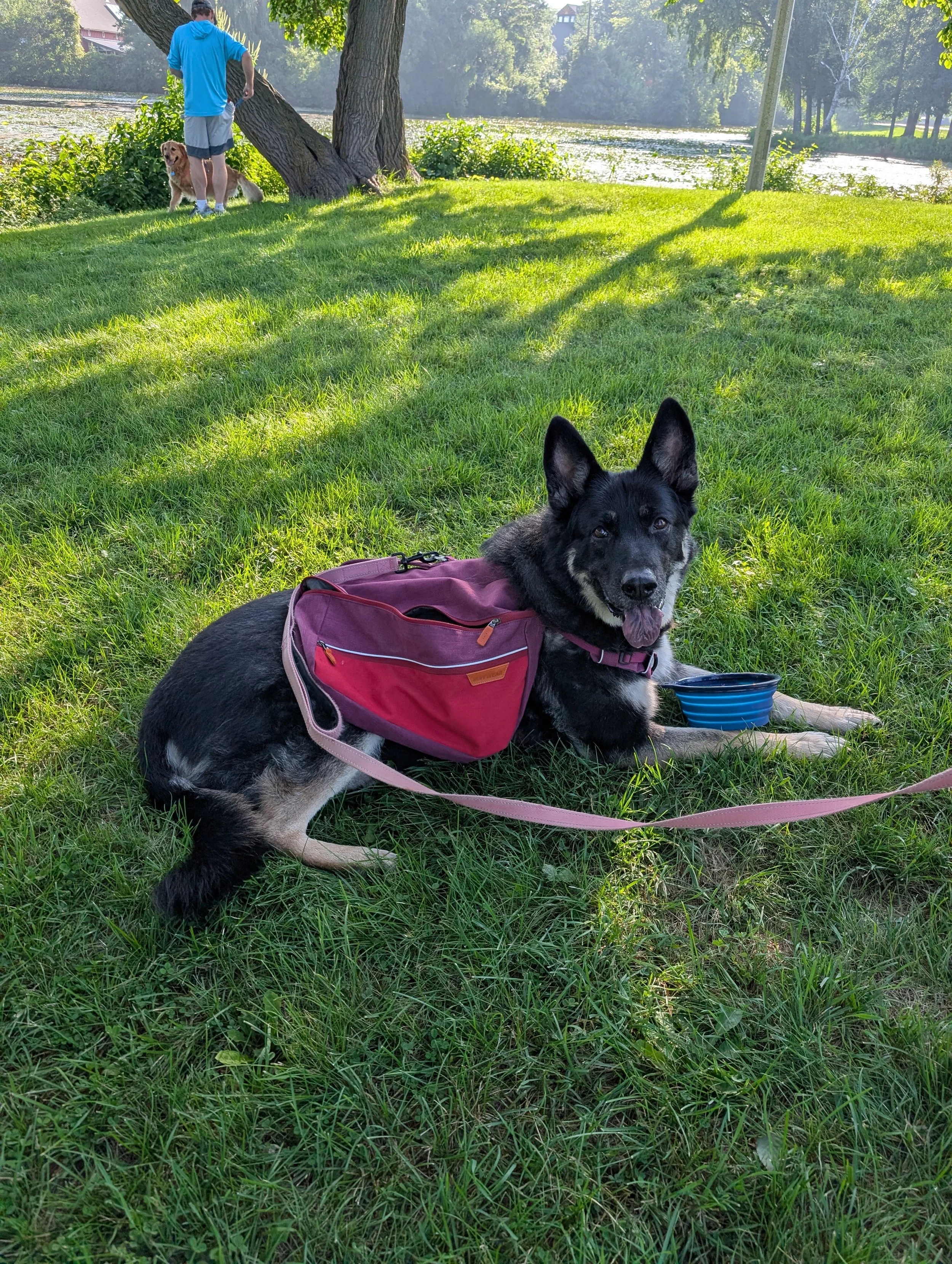
Know When to Call It
A great 20 minutes doesn’t need to become a mediocre 40 minutes if you know what I mean. Like if one more runner zooming past is going to put them over the edge, call it. Or if your pup was fired up and now they are dragging behind…probably should have called it a few minutes earlier. If you show up and there’s a busload of children gearing up to hit the same trail as you, maybe you never leave the car and go get ice cream instead. The trail will still be there.
Bottom line? Some of the best dog handling has nothing to do with teaching your dog a new skill. Choose the right adventure. Build some predictability. Know when they've had enough.
And don't let someone else's version of a “good dog” or a “good hike” dictate yours.
Now leash up & let's go!
